AUDIO & MUSIC


Every sound in RedCell is original — composed, recorded, designed, and mixed in-house, then integrated as systems rather than placed one-shots: an adaptive score that transitions on the musical grid, MetaSounds that react to gameplay, and designed feedback for everything the player touches.
01 | Music System
Quartz-Driven Adaptive Score
Music runs through a dedicated Music Manager — a GameState component each world's Experience adds at startup, so every world owns its own musical identity. The manager rides a Quartz clock: gameplay can request a state change at any moment, but transitions are quantized to musical boundaries, scheduled sample-accurately so the score moves between explore, combat, and stinger states on the bar — never cutting mid-phrase.
The score itself is composed per Experience: each world is getting its own set of original tracks, written so their sections can hand off to each other on the grid the manager keeps. Composition, mixing, and mastering all happen in-house in Ableton Live and Pro Tools.
Every musical knob is exposed on each child MusicManager Blueprint, so authoring a world's music is configuration, not code: the MetaSound music system itself, the Quartz clock name and settings (time signature, BPM), and the quantization boundary (quantization type, multiplier) are all set per world — with persistence across level transitions on by default. Dedicated debug toggles for manager lifecycle and Quartz values make timing issues visible instead of audible-only.
02 | Gameplay Bridge
Combat-Reactive Score
The score reacts to combat without the music and AI systems ever referencing each other — they talk through the GameplayMessage subsystem. When an encounter's combat state flips, the enemy spawn manager broadcasts a verb message GameplayTag whose magnitude encodes combat on or off. The Music Manager listens for that tag on BeginPlay and drives its Quartz state from the payload — fully decoupled, either system can evolve or be swapped without touching the other.
Getting that message to the right ears is its own problem in multiplayer, solved with a custom net-mode message router: in standalone or on a client the message broadcasts locally, while on a dedicated or listen server it routes through the GameState's reliable multicast so every connected client's music flips with the encounter. The same switch keeps audio playback behaving correctly across PIE net modes during testing.
03 | Sound Design
From Ableton to MetaSounds
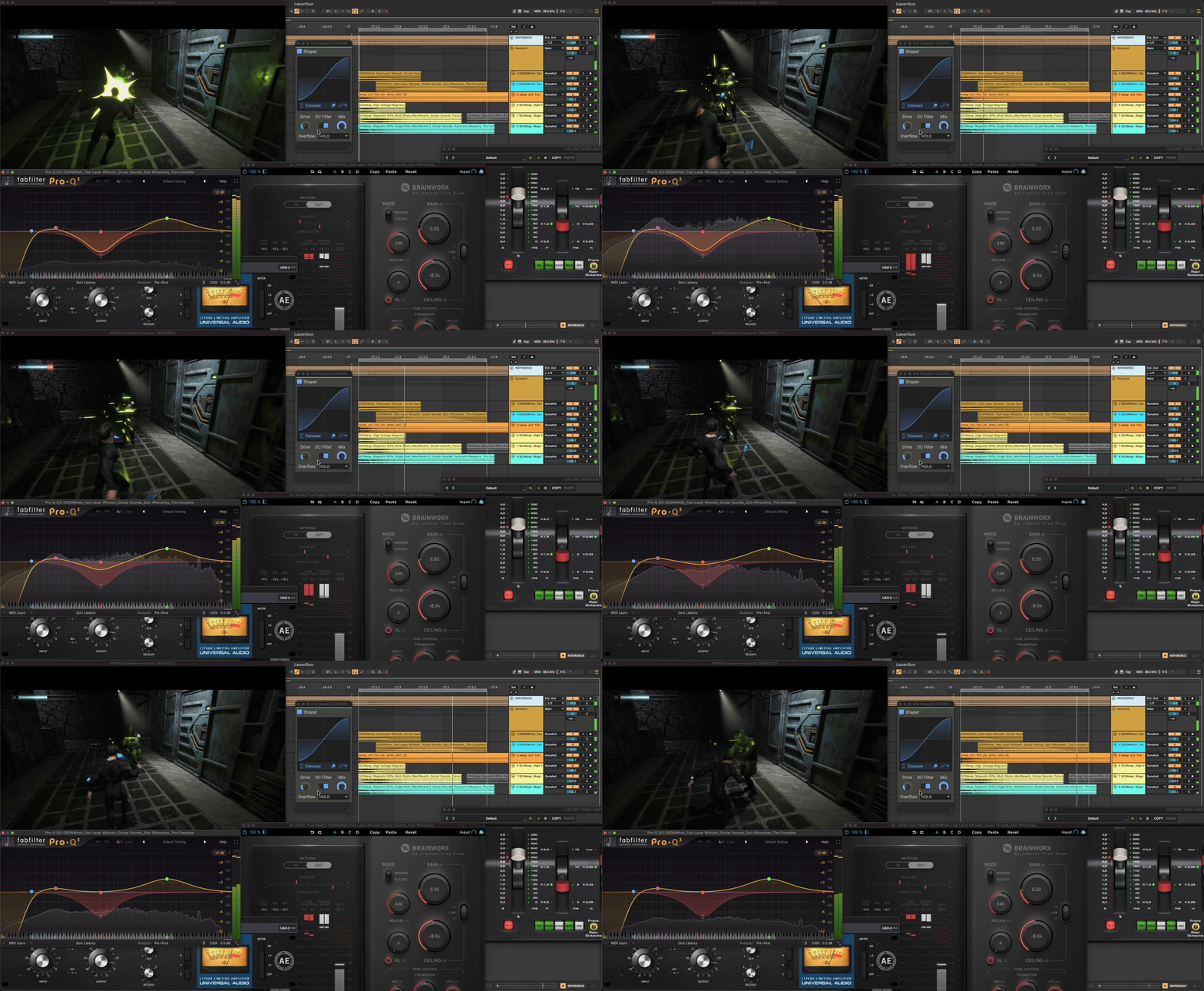
Every effect starts as layered sample design in Ableton Live and lands in a MetaSound that gives it runtime behavior — randomized pitch and volume variation, distance-based filtering, and surface awareness. Custom-built foley banks carry the physical detail: shell casings ring differently on grass than concrete, and weapon handling has its own recorded layer.
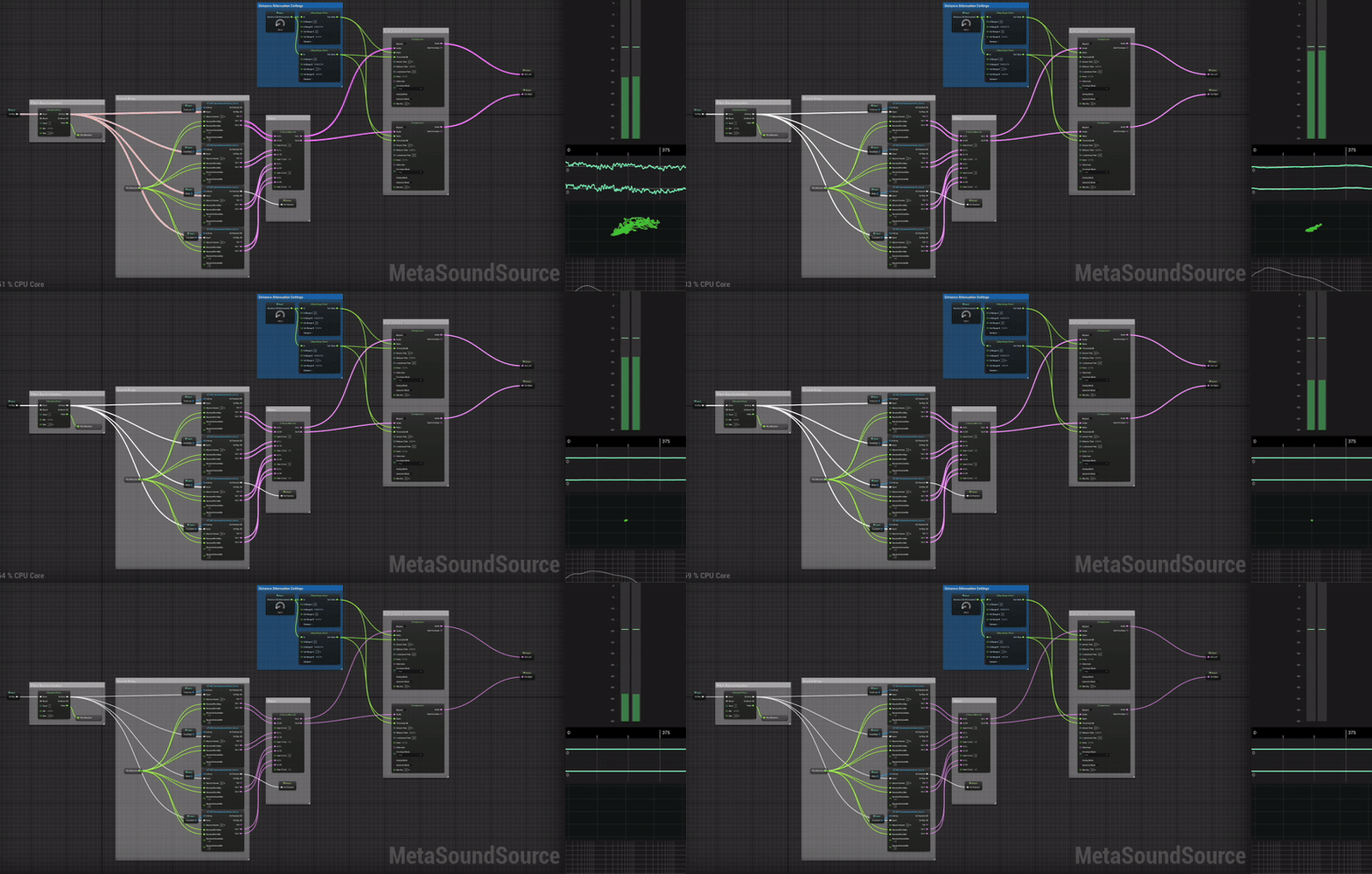
The shell impact MetaSound is built around a three-stage lifecycle — initial transient, varied mid, decay tail — selected by an integer computed from the shell's particle velocity. That produces a far more natural-sounding ejection than a binary first-hit/bounce split, with no added Niagara complexity. Weapon mixes stay clean through sidechain compression: each weapon's punch layer writes to a weapon-fire audio bus through one reusable gated bus-writer patch shared by every weapon MetaSound, and a sidechain compressor on the shell-eject output ducks the brass while firing.
The gate is driven by PawnSeed — a deterministic per-pawn variation key (the local player is always −1) — so only the local player's gunfire ducks their own shell foley, and every AI pawn gets its own audio character for free: the seed feeds randomized EQ on enemy weapon fire, with distance-mapped filtering thinning shots the further away they originate. Server-only states like low-ammo tones are gated to the local player.
04 | World & Ambience
Spatial Audio & Soundscapes
Ambient beds are driven by the Soundscape system, layering procedural environmental audio per area, while attenuation and occlusion are tuned per sound category — close combat stays immediate and punchy, environment audio falls off naturally and ducks believably behind geometry.
05 | Interface & Narrative
Designed Feedback Everywhere
The sound design extends past combat into everything the player touches: UI feedback for hover, select, equip, and menu transitions, pickup and collectable cues triggered through the same GameplayCue path as their visuals, and narrative dialogue written, performed, and processed in-house.
In Development
Original score per Experience — in production
Expanded foley & surface banks
Narrative VO & mission dialogue pass