CASE STUDY REFLECTIONS

Two ways to put a sound in a room. This case compares Steam Audio's physics-driven propagation against Audio Gameplay Volumes driving quad impulse responses I designed and measured myself, switched live in the same level.
Implemented in UE 5.8 · Impulse Response Utility & Pro Tools · Real-time switching
Case 02 | Rooms & Reflections
Steam Audio Propagation vs Custom Quad Impulse Responses
The Approach
Project Acoustics and the Triton engine weren't available for macOS, so wave-based propagation was off the table. Steam Audio covers a similar concept, so I updated it for UE 5.8, patched it for multichannel, and implemented its full stack instead: real-time reflections and occlusion, transmission through materials, and baked directivity pathing through a probe volume. To hear the simulation against a designed alternative, I built experimental quad impulse responses for the same spaces and staged them with Audio Gameplay Volumes, switching between both paths in real time.
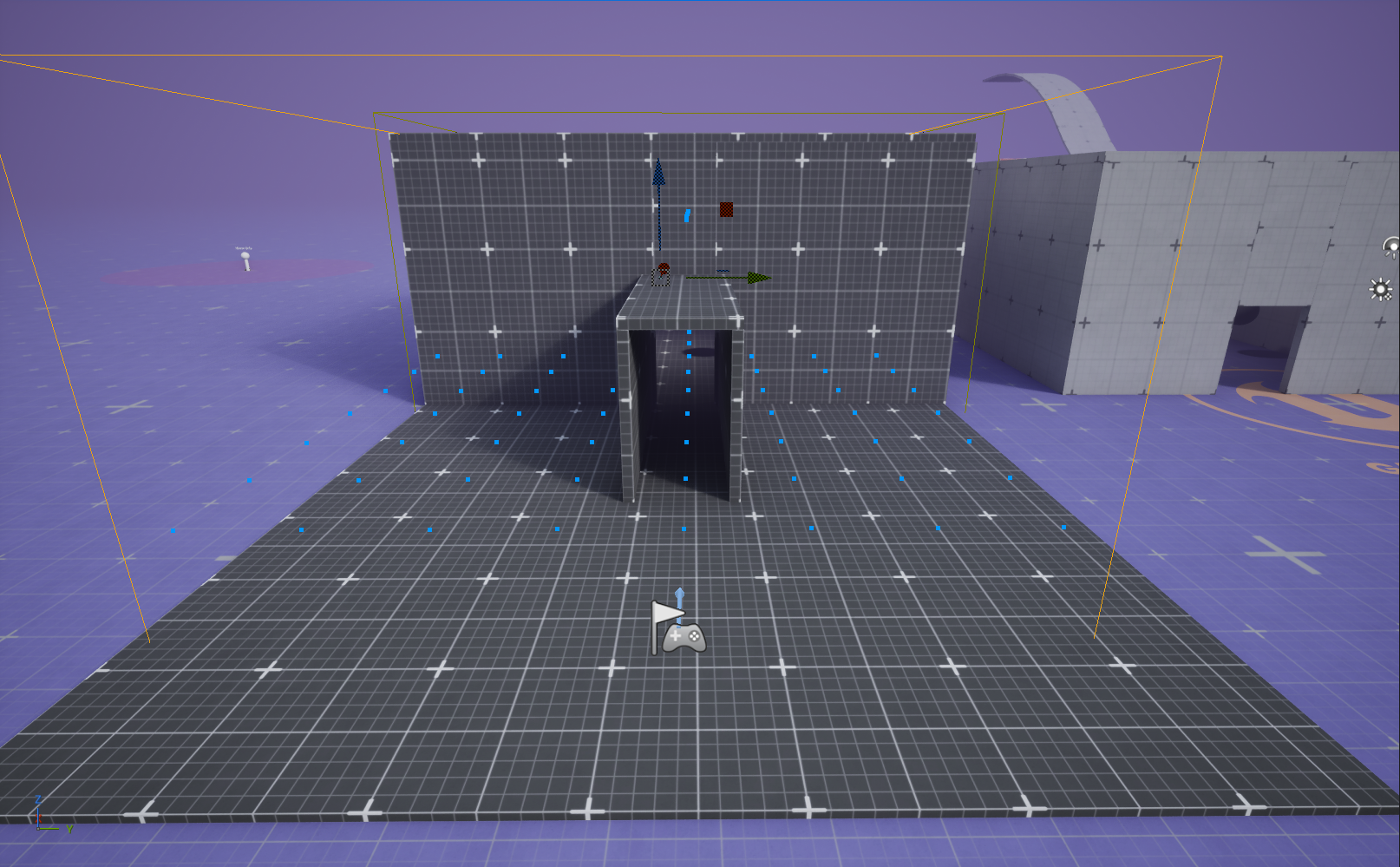
The Steam Audio side of the comparison uses a Concrete material at full transmission.
The Impulse Responses
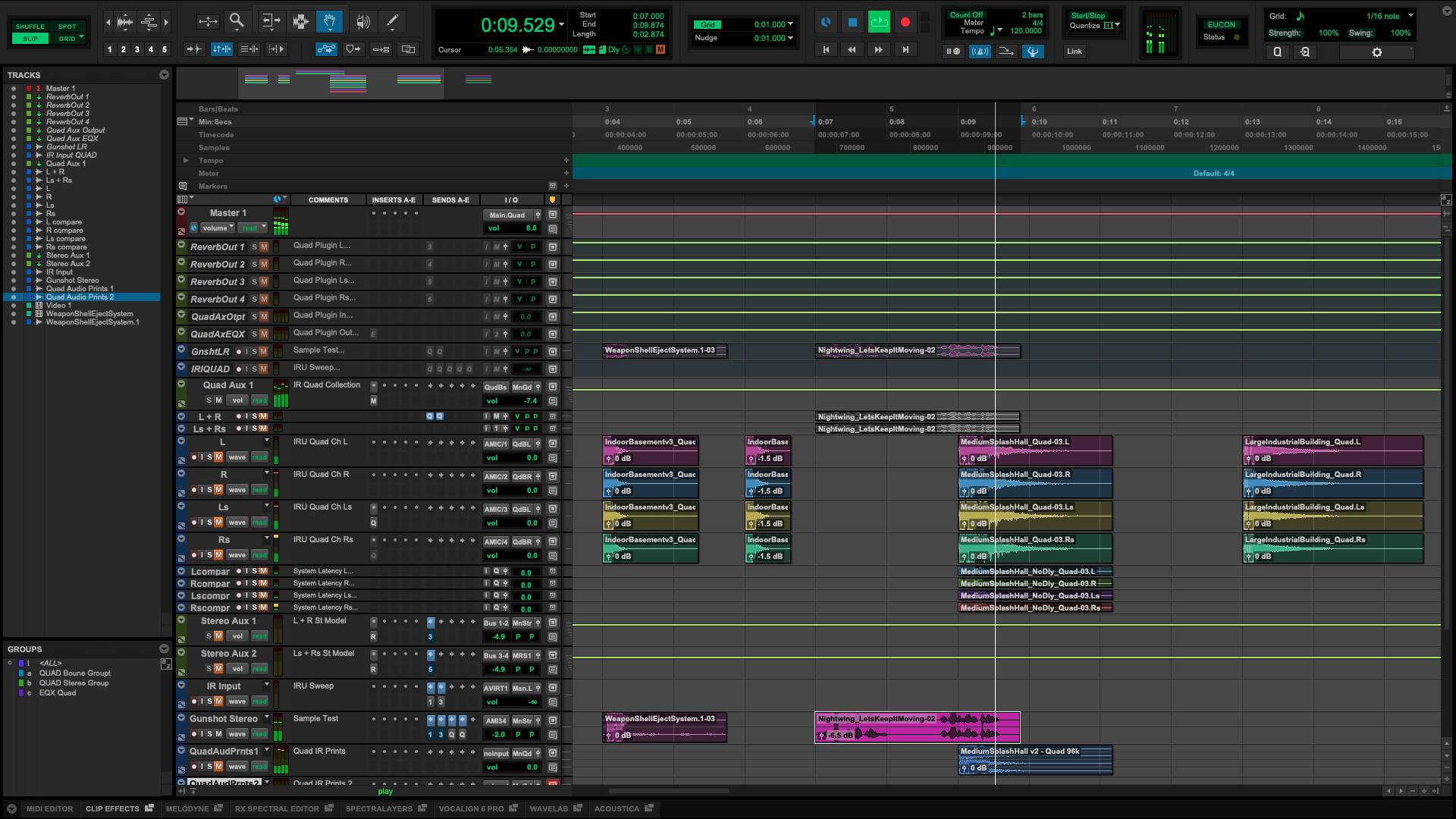
The impulses were recorded and deconvolved using Impulse Response Utility from Logic with two different methods. The Basement IR used 2 stereo instances of a space model plug-in with more diffusion, distance, and reflection times applied to the rear channels. The Medium Hall IR used a true quad plug-in, where I separated each individual channel. These were edited, combined, and rendered in Pro Tools.
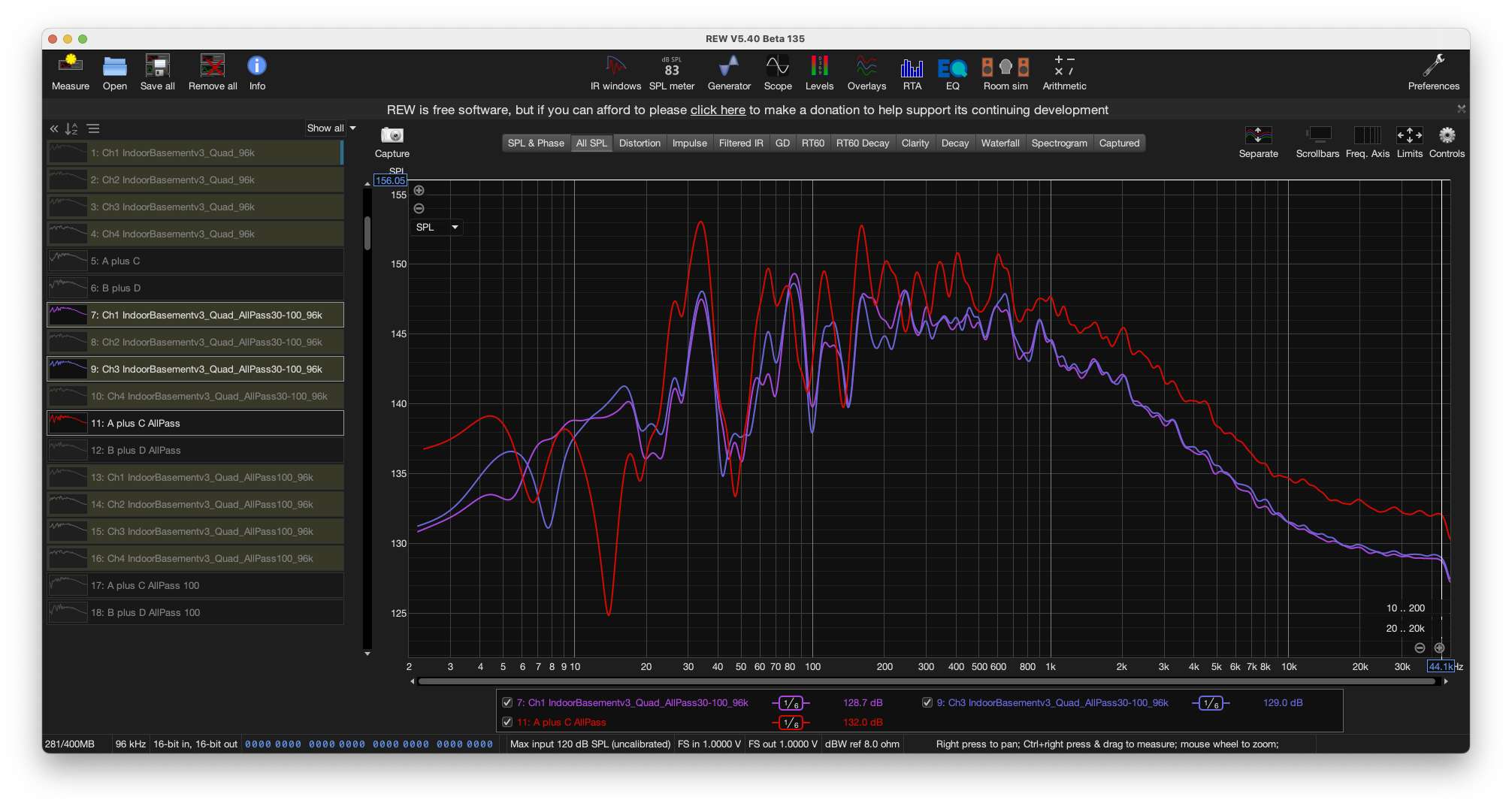
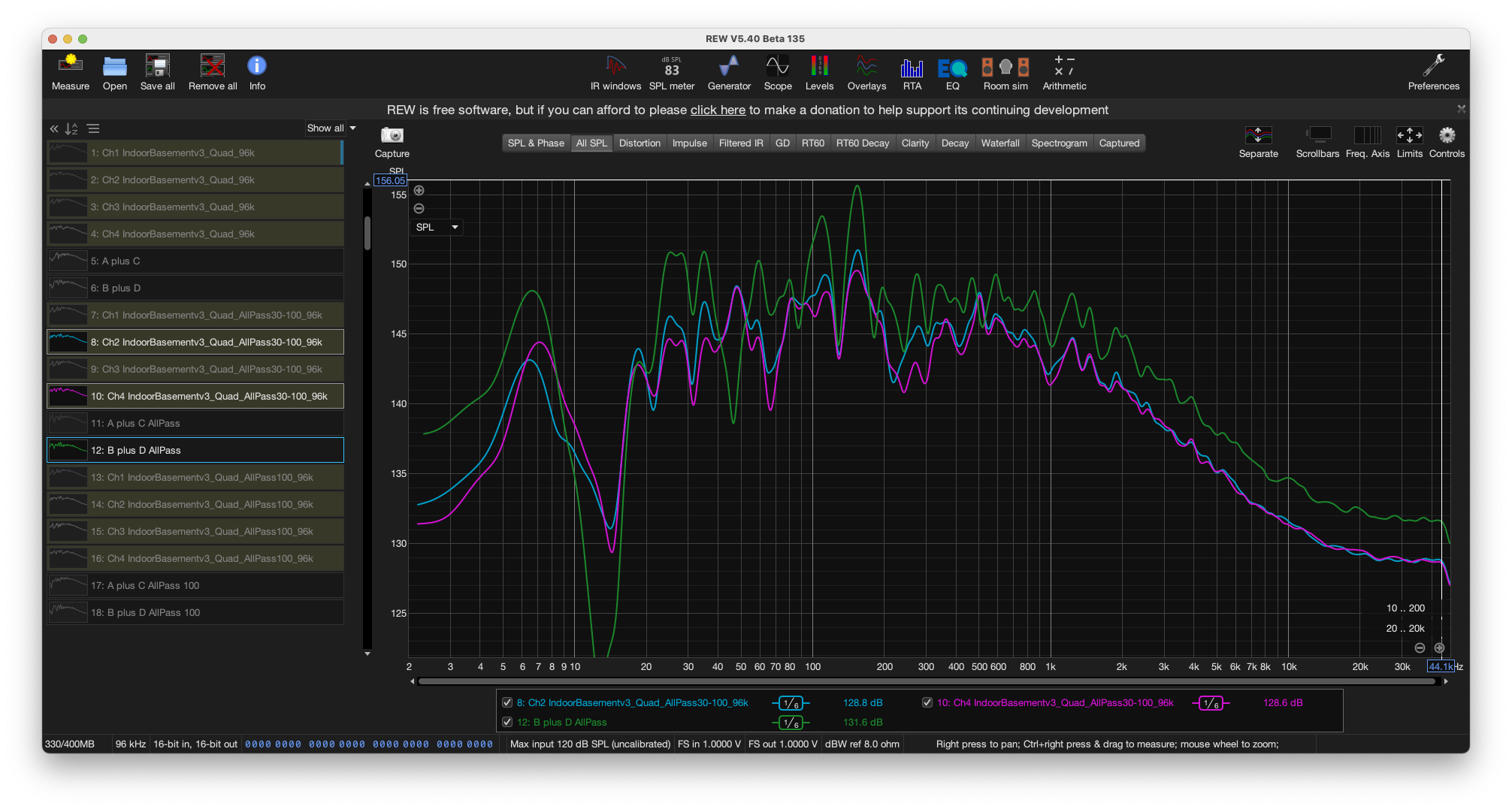
The Basement IR response was measured in Room EQ Wizard to check phase correlation between L + Ls and R + Rs. Between both measurements, I noticed correlation issues around 30Hz and 100Hz, so I rebalanced the front and rear pairs with an all-pass filter at those frequencies.
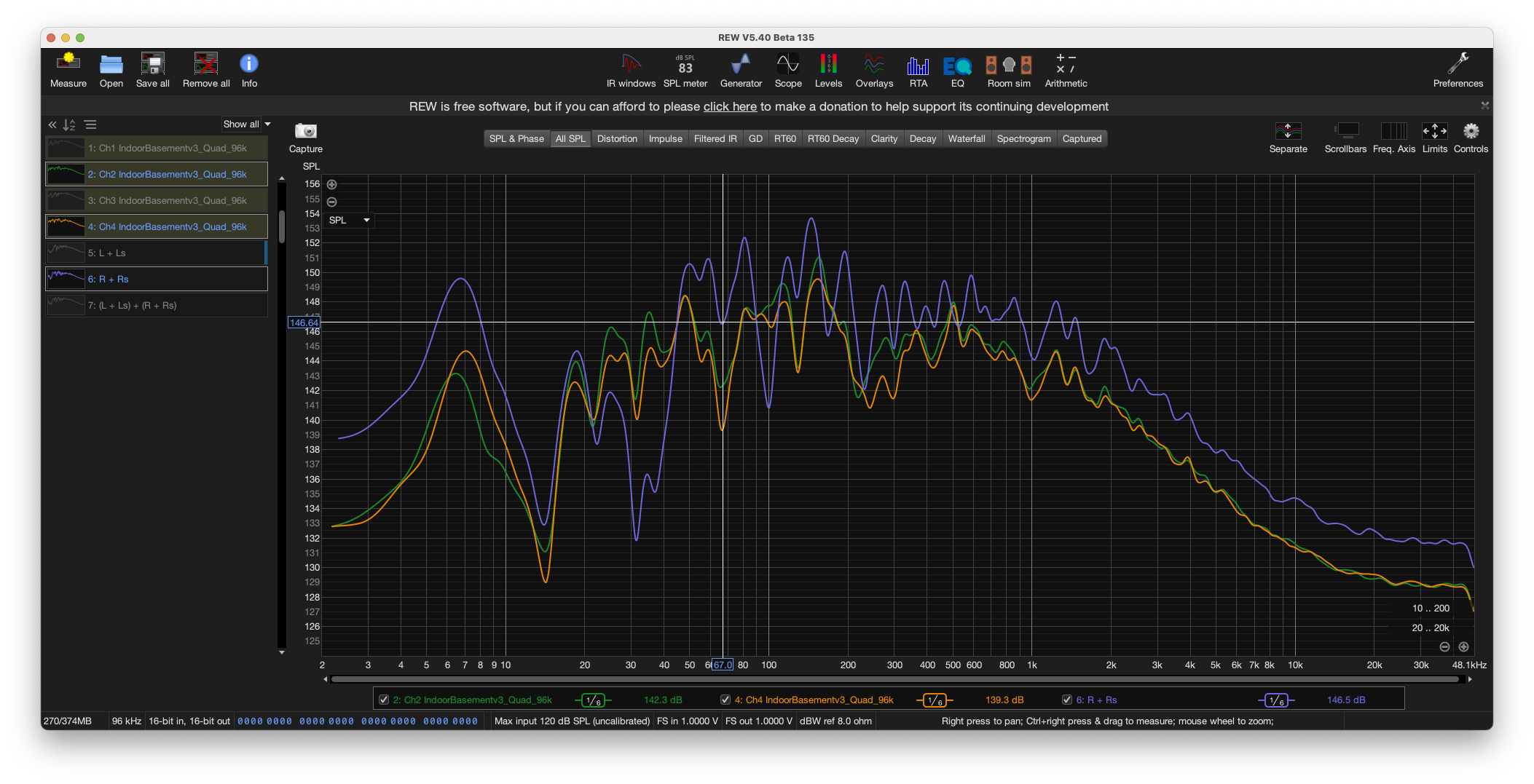
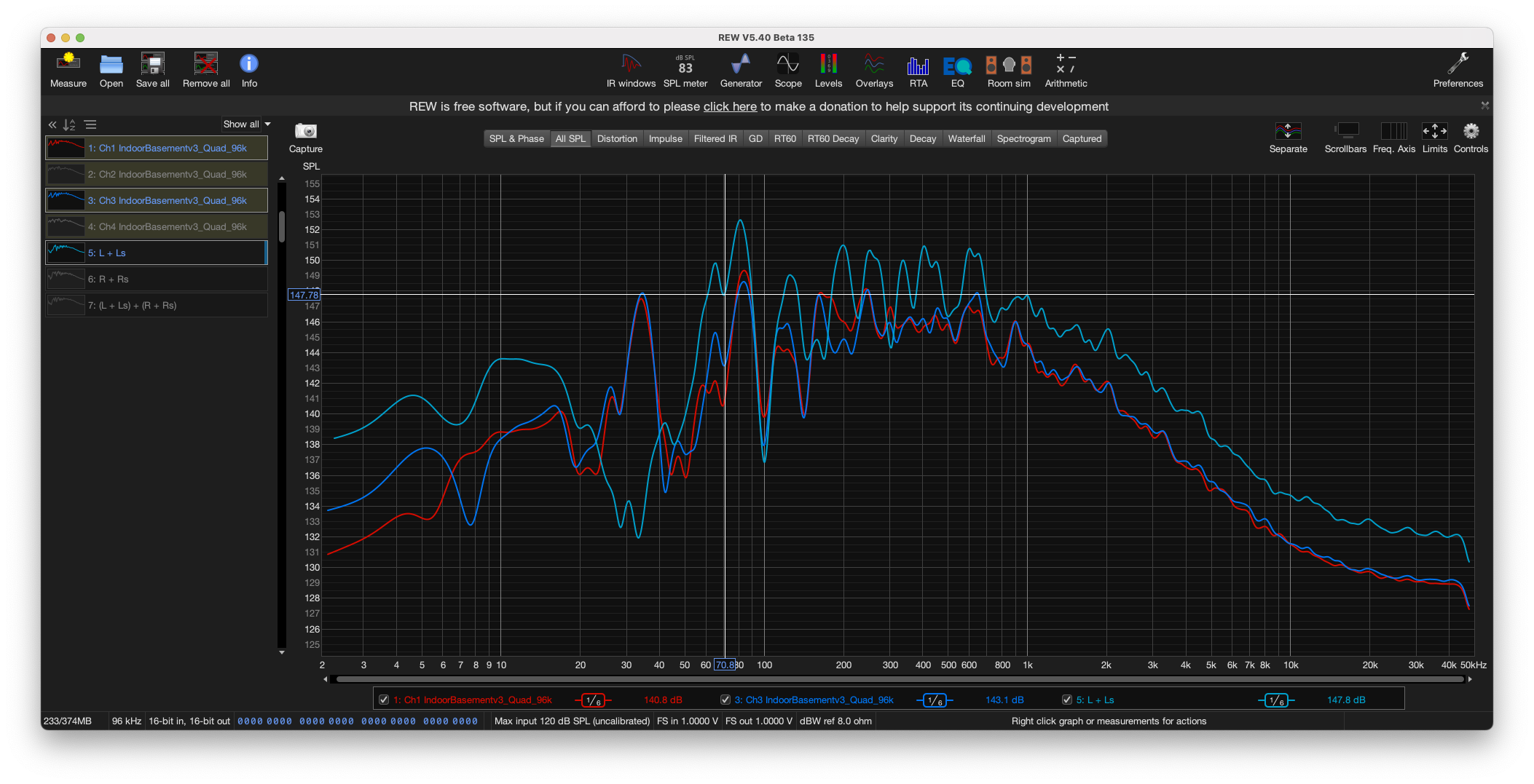
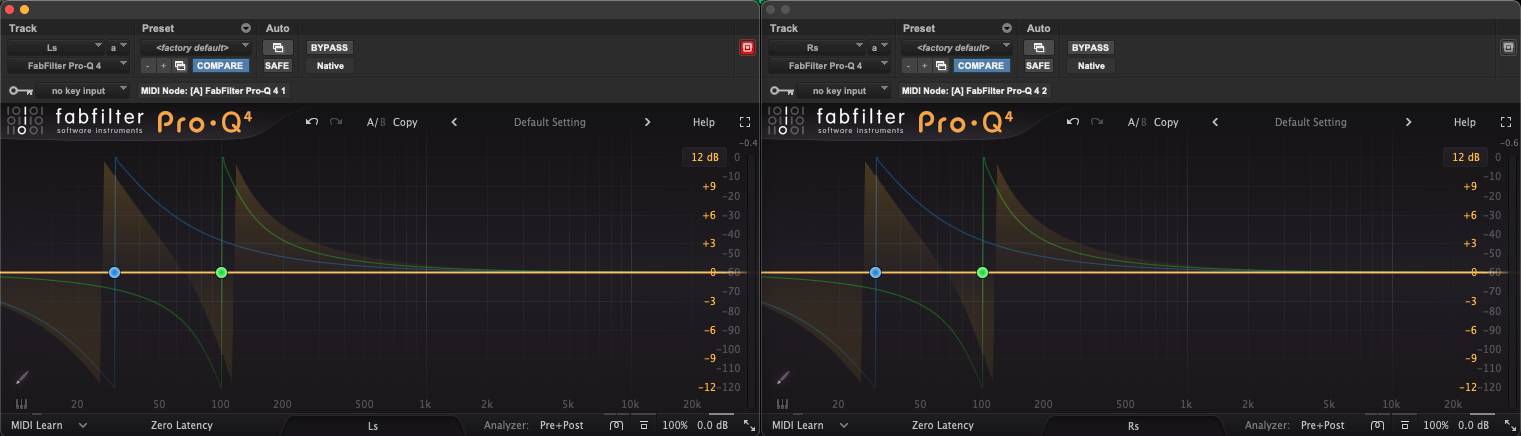
After applying the filters, the measurements were more consistent above 80Hz. Since these lower problem frequencies would also cause a muddy mix, high-pass filters were used on the Audio Gameplay Volumes so the quad image stays stable when the rears fold forward.
Each response was auditioned through a convolution engine against dry takes before printing.
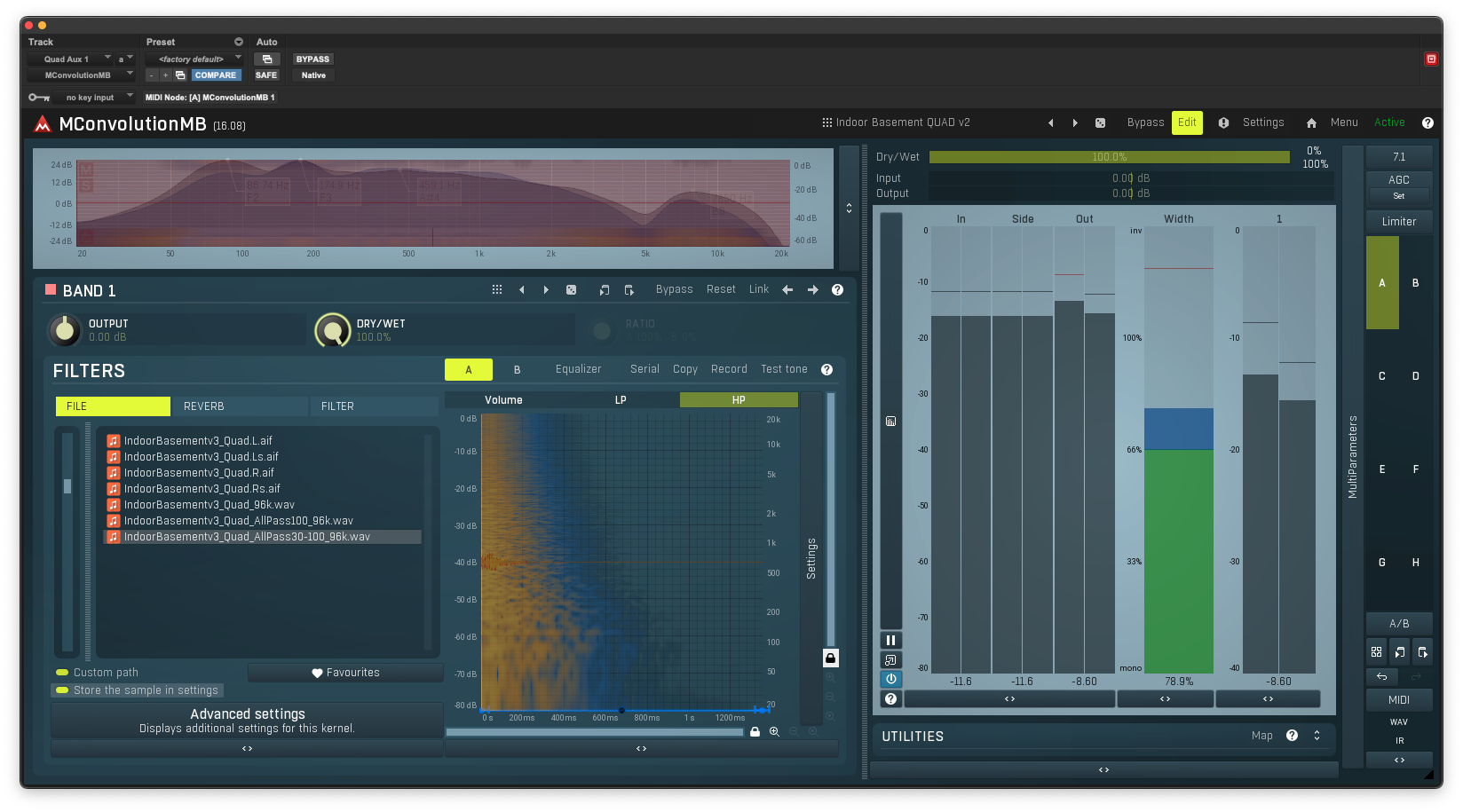
In engine, the impulses run as quad convolution on submixes fed by Audio Gameplay Volumes. The room and the hallway are separate volumes, and the hallway send follows a custom distance curve anchored to measured gameplay distances, so the room reflects through the full hallway and dissipates past the entrance.
All paths play from the same source through separate attenuation settings, so a single key crossfades between them in real time without restarting playback.
Audio Comparison
Male dialogue, dry and through each space. Quad playback requires a surround-configured output.
Clean · Stereo
Basement · Quad IR · four channels
Medium Hall · Quad IR · four channels
True 4-channel files · Requires surround configuration, otherwise folds to stereo
The Comparison
The Steam side performs better on directivity. Moving through the doorway, the pathing and occlusion follow the geometry seamlessly. The designed side wins on specific room identity. The basement and the medium hall read instantly as places, and the image holds the room around the listener. The video above switches between them live.
Both approaches have their place in the project. The baked pathing and real-time reflections scale to every space and transition without per-room authoring, while the designed responses give the spaces that matter an identity of their own. Project Acoustics layers real-time design controls on top of wave-based propagation, which would land right between these two tests.
Playing quad convolution in engine depends on the surround output work covered on the MultiChannel Audio page. The first case study covers the WhizBy direction fix.